Fall is a time of change and this fall this is abundantly apparent in my life. Particularly moving from a small apartment into a house, with a yard and a lot of work to do. While change is definitely making its appearance in my life what always amazes me about fall is how much stays the same. Maybe it's because I'm an autumn baby, but I love the fall and feel more myself at this time of year, both good and bad. My true nature comes out more, my love of warm spicy things, fires, camping, engaging the elements, cooking. At the same time I tend to get emotional as all the leaves fall off the trees. I like to cozy up to a fire with a fortifying drink. My favorites are mulled wine and hot Nog a la McTrouble.
Hot eggnog is one of my favorites. I have it for breakfast on cold mornings, or on cool evenings fortified with a bit of brandy or rum. I like to make it with black pepper, cardamon, vanilla, and wild juniper berries, sweetened with honeysuckle infused honey.
Tuesday, November 6, 2012

Friday, October 5, 2012


Wednesday, October 3, 2012
Beach Plums

If you spend any time on the Eastern Shore anytime soon, keep an eye out for Prunus maritima: Beach plum. This plum is a native to the Atlantic coast, growing in the dunes from Maine to Maryland. Because of the state of our dunes, unfortunately this plant is endangered; not because she isn't resilient and prolific, but because beachfront property is so valuable and susceptible to development.
The little plums are tiny, only about the size of a cherry. They are sweet, sour, and astringent. Some might even call them bitter. The season of ripeness is August through early October. The shrubs are biennial bearing so you'll have to find a few spots to harvest. Usually the fruits are made into jam. In fact, I first learned about these fruits at the farmers market from Jerry of Ferry Landing Farm & Apiary. His wife makes delectable jams: strawberry rhubarb, elderberry, and beach plum. When I was at the beach observing the plants I realized I was looking at a Rosaceae family shrub and it had fruits on it. One taste and I knew instantly what it was. When I started jumping up and down from excitement I got some strange looks and my husband pretended he wasn't with me (note to self: foraging on the boardwalk during an art festival will draw attention). While he was wandering off into the crowd I was able to share some of my enthusiasm with one nice gentleman who seemed genuinely interested to learn a little about them.
Harvesting these plums isn't the easiest feat. The plums themselves are somewhat concealed by the leaves so knowing a few characteristics of rose family shrubs is useful. Lazy so wikipedia. Blogger Toby Cecchini describes the process thusly:
"This harvest found me pulling wooden spines out of my shin; getting covered in bloody scratches as I pushed into dense, barbed shrubbery; stretched out in comically abusive yoga postures with my hands snaking through prickly labyrinths toward the chalky bloom of a perfect dark plum just out of reach. None of it will sway me."
A quick internet search on my way home gave me the idea to make an infused liqueur. In all honesty, I read this article and decided to do the same. According to some the flavor of beach plum is similar to that of sloe berries (I don't know because I have never seen a sloe berry) which are the sour and astringent fruit of the blackthorn tree, a spiny shrub that grows untamed in the hedgerows of England. These fruits are made into sloe gin. Now I am not a huge fan of gin, or rather I should say of college party cheap gin and tonics, but I wanted to expand away from just doing brandy or vodka infused liqueurs.
The problem with finding a new wild food is sometimes I get really excited about it and other life stuff gets in the way. I got home from the beach at around 7 pm on a Sunday so the liquor stores were closed and I was leaving for a trip/conference the next day at 5 am. Fortunately freezing the fruits was recommended in the aforementioned article so I threw my bag of plums into the freezer and packed for Medicine of the People.
When I got back I picked up some gin, threw the plums into a jar and covered with a good amount of Tanqueray (which the shopkeep informed me is one of the only gins made with fresh herbs). You can add a bit of sugar at this time, or wait until you're mixing up a cocktail. Infuse for at least a month. The gin will take on a beautiful rose color and will taste both fruity and almondy. I am planning one more trip out to DE for plums to make infused gifts for this winter. I'm thinking I'll go to Beach Plum Island (yes it's a real place).
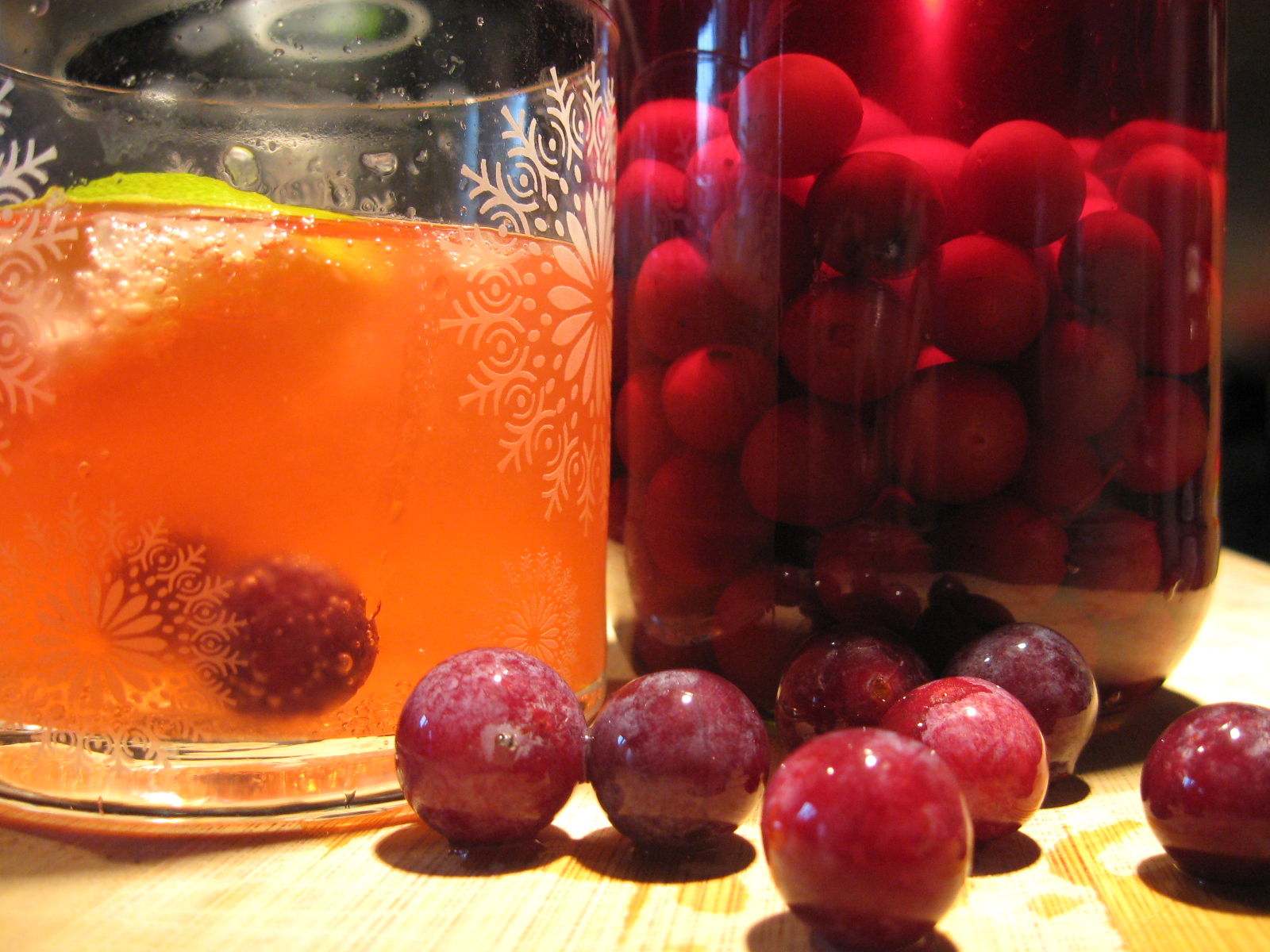
BEACH PLUM GIN FIZZ
2 ounces beach plum infused gin
1 ounce fresh lemon or lime juice
sugar or simple syrup to taste
Prosecco or sparkling water to fill
Lemon or lime wedge, for garnish.
In a shaker filled with ice, combine first 3 ingredients and shake well. Strain into a pretty glass and top with sparkling wine or water.
Tuesday, September 25, 2012
Medicine of the People
 |
| Photos by Rosalee de la Forêt |
I came home feeling exhausted and full. I took many wonderful classes and got to know some of the teachers better. In many ways my appetite for knowledge is never sated, but this year it wasn't the classes that held my attention, it was the people. I spent time going on walks, talking about interesting client cases, herbs, the work other people are doing in the world. I learned the voices to accompany the words I read on blogs. Building friendships in person is one of the things I love most about this gathering and one of the things that keeps me coming back.
 |
| We also held up an ATM because we were in the old west. |
Thursday, August 23, 2012
Tuesday, August 21, 2012
Lobelia Tincture
I know it's been a while since I last posted. It's summer and I get distracted.
I have been keeping myself busy preparing medicines and exploring my local environs. Most recently I have been harvesting lobelia, a somewhat controversial and immensely useful herb for asthma and bronchitis. It is also a profound emetic if you are not careful. Go here if you want to learn about the controversy around it because it is too big a discussion for me to undertake today.
Lobelia inflata is a small little woodland plant. Absolutely beautiful if you ask me. I mostly use it in asthma. I have also used it for its muscle relaxant properties and for quitting smoking (in combo with a few other herbs depending on the person).
To make a fresh plant tincture of this or any other herb, measure by weight your fresh herb. Say you have 1 ounce, that is equal to 30 grams. Chop it up and put it in an appropriately sized glass jar. To make a standard 1:2 (weight to volume) tincture you will need twice as much alcohol as herb. The metric system is our friend here. 1 gram is equal to 1 mL. So for 30 grams of herb you will need 60 mLs of pure alcohol for your menstrum.* Choose a jar that is filled by your herb and menstrum. You don't want lots of airspace because the herb will float to the top and out of the alcohol. Lovingly shake the jar daily, or anytime you think of it. It will be ready in a month.
The 1:2 ratio works for most fresh plants (for dried herbs 1:5 is standard using a more dilute menstrum like vodka or brandy). Lobelia is a very strong herb and is used in drop doses (1-10 drops) so some people prefer a 1:4.
Kiva Rose has a fabulous write up on how to make tinctures. This is a great time to prepare herbal preparations for the fall and winter seasons. Choose herbs you like and will use this coming fall and winter. I particularly love having elderberry and ginger on hand.
I originally intended to write about the bounty of the summer season and clearly I have gotten off tract. I think tomorrow I shall have to write on elderberry and getting ready for fall.
*For your menstrum you want the strongest alcohol you can get. Pure grain alcohol (Everclear) is what I use. It is 95% alcohol, while vodka on the other hand is only 40%. The reason you want strong alcohol is because fresh plants are mostly water by weight and will dilute the alcohol which needs to be a certain strength to extract and preserve the herbal constituents.
Monday, June 25, 2012
Self Heal Salve
 Prunella vulgaris is one of those pretty little mints that doesn't like to call attention to herself. Her beauty is mostly appreciated by small children and bees who are close to the ground and don't mind squinting at her delicate tiny flowers. They lose interest though, because she doesn't smell particularly nice and she is far too common in meadows and on the edges of fields. She patiently watches over the children as they play games and scrape their knees. She is a fairy flower, one with motherly love, and completely lacking mischief.
She goes by many names: self heal, all heal, prunella, heart of the Earth, woundwort, blue curls...
Culpepper describes her aptly: "Self-Heal whereby when you are hurt, you may heal yourself,' tells us that: "it is an especial herb for inward or outward wounds. Take it inwardly in syrups for inward wounds, outwardly in unguents and plasters for outward."
Because of this herb's abundance and wound healing abilities (she also has natural antibiotic properties) I decided to finally make a salve with Prunella. I went to a local park and found her growing in a lush patch with plantain between some secretive woods and a ball field. Plantain (Plantago sp.) is another fantastic herb for wounds. I gathered a few handfuls of each and let them wilt down for a few hours in a basket.
To make the salve I chopped the leaves and flowers and placed them in a metal bowl I use to make salves. You can also use a simple glass jar (pint sized). I covered the herbs with a mixture of oils: grapeseed which is a nice light oil and what I had on hand, and coconut oil which is a heavier and more stable oil. If my brain had been working after having spent all day out in 100 degree humid heat I would have just used the coconut oil, or maybe olive oil if I had it on hand. The reason being, olive oil has natural antimicrobial properties and doesn't spoil as readily as more delicate oils like grapeseed. Grapeseed is great for skin preparations because it is easily absorbed, but it can go off or become rancid in a short amount of time if care isn't taken. Coconut oil is far more stable due to the presence of saturated fats. There is also something about it being a tropical oil which makes it less prone to rancidity in hot humid heat. Other solid fats work well. I hear lard is fantastic. That's enough about oils...
I placed the little metal bowl over a pot of simmering water (double boiler method) and let it warm to about 100-110 degrees. Then I turned the stove off. Then back on, and off, and so on over the course of the evening until the oil had taken on the lovely green hue of the prunella and plantain. The goal here is to warm but not fry the herbs which will take on a noticeable scorched smell if it gets too hot. This method also allows some of the moisture in the plants escape. Trapped moisture will make the oil go off, or worse get all fuzzy with mold. I have lost many infused oils this way. In drier climates folks can do solar infusions or other slower methods. Once the oil is done infusing, strain and set aside covered loosely with a napkin or piece of cloth, again to let moisture escape. After a few days any moisture will settle to the bottom of the jar. Pour off the oil and leave the last little bit at the bottom of the jar.
To make a salve simply melt a bit of beeswax into some of the herbal oil. Making salves is all about simple proportions - the ratio of oil to wax. 4 parts oil to 1 part wax yields a firm salve. You can play with it until you get a consistency you like. I added some lavender essential oil (just a few drops) for its preservation, antiseptic, and aromatherapy properties. Pour into little pots, jars or twist tubes. Use on bites, scratches, and the little wounds that seem to happen in the summer.

Subscribe to:
Posts (Atom)